Facts & Information
The science and statistics behind fluorescent lamp disposal and mercury contamination.
Understanding fluorescent lamps and mercury
Light generation
An electric current passing through mercury vapor generates ultraviolet (UV) light. This UV light then excites the phosphorus coating on the inside of the tube, producing visible light.
What's inside a lamp
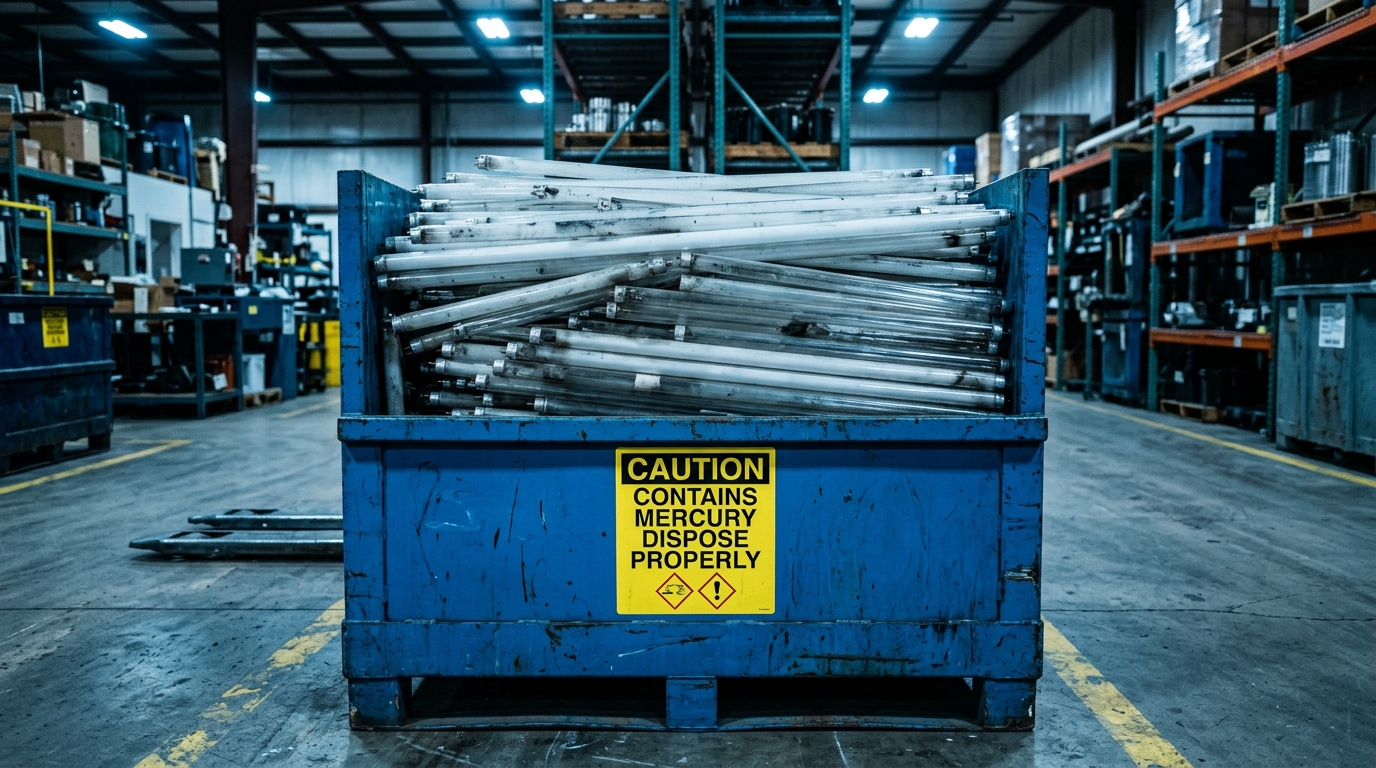
A typical lamp consists of a glass tube, metal end-tops, metal cathodes, mercury phosphorus powder, vaporized mercury, and electric fibers within a high vacuum. A single 4-foot lamp contains 5 to 50mg of mercury.
Why it's hazardous
Mercury vapors can travel over 200 miles from landfills and easily leach into soil and water. It is highly toxic to the nervous system and kidneys, and can cross the placental barrier.
The scale of the problem
Fluorescent lamps disposed in US landfills annually
Mercury waste generated from disposed lamps each year
Mercury in a single 4-foot fluorescent tube
Mercury can pollute an entire small lake
Mercury emitted annually by 187 municipal incinerators
Distance mercury vapors can travel from a landfill
"In 1992, the EPA added mercury to its hazardous substances list, establishing a threshold of 2mg/liter — a limit usually exceeded by disposed lamps. By 1997, mercury was #3 on the ATSDR/EPA hazardous substances list."
Ready to recycle compliantly?
Schedule a pickup or browse our compliance FAQ and fact sheet.